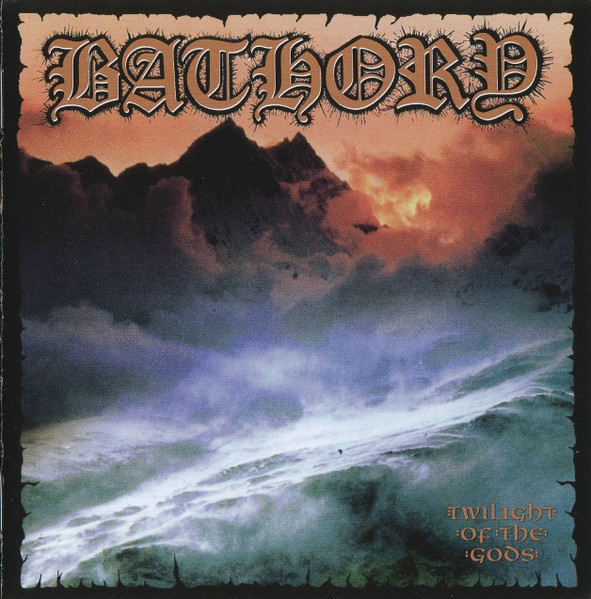
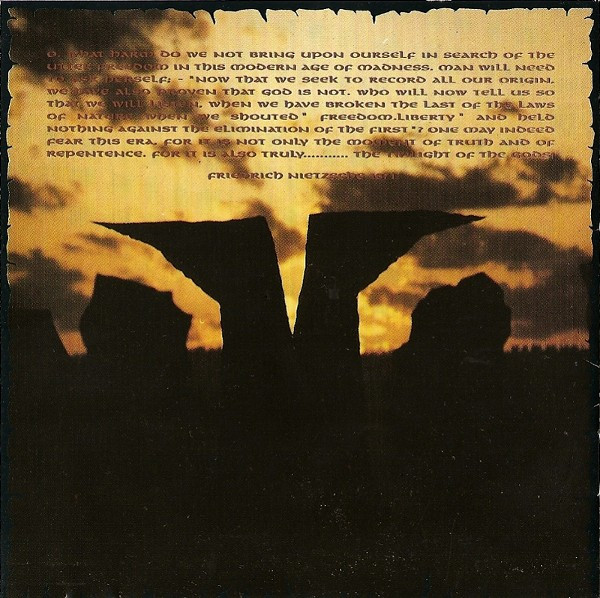
On the back cover of Bathory’s 1991 album Twilight Of The Gods, we find a quotation signed “Friedrich Nietzsche 1871”. Through releases such as this, Bathory had a major influence on the emergence of the Norwegian black metal scene in the late 1980s and early 1990s. It is likely that many of those who listened to Bathory and carved out their own place in Norwegian black metal history at the same time also developed an interest in reading the German philosopher Friedrich Nietzsche (1844–1900) through the quote on the back cover of Bathory’s Twilight Of The Gods. But does the quote actually come from Nietzsche? Or have Bathory, with lyricist and creative director Thomas Börje “Quorthon” Forsberg (1966–2004), been pulling our leg for over 30 years?
There are many examples of black metal artists who draw on texts written by Friedrich Nietzsche, whether as a source of inspiration, through direct quotations or intertextual references. In particular, it is Nietzsche’s liberation of humanity from God-given norms, self-development, and the empowerment of individuals to find their own values and choose the life they desire that appeals to black metal. In summary, we can say that black metal identifies with the Übermensch’s intellectual leap away from Christian slave morality. Placing oneself above others by having understood something others have not is an important part of black metal’s ideology.
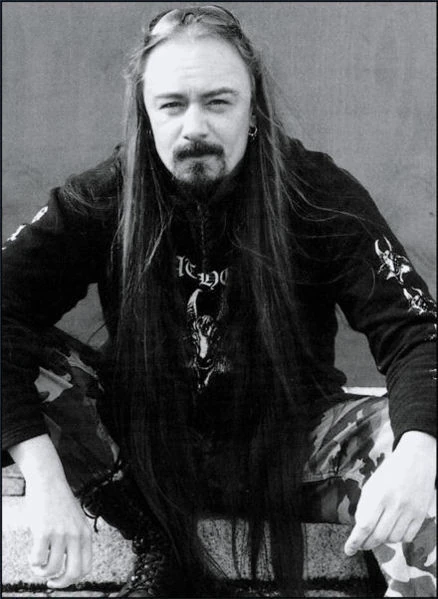
The Swedish first-generation black metal band Bathory, which formed in 1983, is thus a band that draws on Nietzsche’s writings both as a source of inspiration, through direct quotations and intertextual references.
Friedrich Nietzsche 1871?
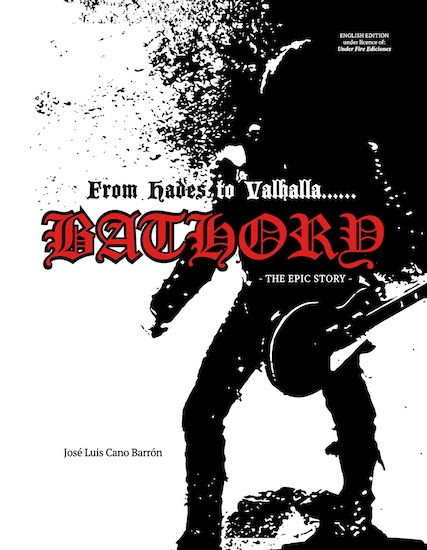
I got in touch with José Luis Cano Barrón, who has written the unofficial biography From Hades to Valhalla… BATHORY – The Epic Story from 2024 about the band, to ask his opinion on the Nietzsche quote printed on the cover of Bathory’s 1991 release Twilight Of The Gods, and signed “Friedrich Nietzsche 1871”. Was this quote written by Nietzsche, or was it not? He could neither confirm nor deny this, but he was able to tell me that Forsberg read a great deal of Nietzsche:
I think Q read all the Nietzche stuff, and even knew that his sister reworked much of the Nietzche before and after his death1
Here, Barrón refers to the fact that Nietzsche’s anti-Semitic sister, Elisabeth Förster-Nietzsche (1846–1935), rendered her brother’s writings anti-Semitic in the period following Nietzsche’s descent into paralysing madness and subsequent death.
The quotation on the cover of Twilight of the Gods reads as follows, including spelling mistakes and odd punctuation:
O, what harm do we not bring upon ourself in search of the utter freedom in this modern age of madness. Man will need to ask herself: – “now that we seek to record all our origin, we have also proven that god is not. Who will now tell us so that we will listen, when we have broken the last of the laws of nature when we shouted ” Freedom. Liberty ” and held nothing against the elimination of the first “? One may indeed fear this era, for it is not only the moment of truth and of repentance. For it is also truly……….. The Twilight of the Gods!2
When I first read the quote, I sat there wondering which of Nietzsche’s texts it was taken from. The words and phrasing are in many ways typical of Nietzsche: it is rambling, bombastic, and full of words that stir up emotions. The sentences seem to lash out at us and our present day with condemnation.

The text is written in English and the quotation is therefore dated to 1871, ending with the words “The Twilight of the Gods”. This was what first made me a little suspicious, because the book Nietzsche wrote, entitled Twilight of the Idols, or, How to Philosophize with a Hammer in English, was not actually written until 1888, and published in 1889, 17–18 years later. In German, the book is called Götzen-Dämmerung, oder, Wie man mit dem Hammer philosophiert, and in Norwegian it is known, amongst other titles, as Avgudenes skumringstid eller hvordan man filosoferer med hammeren.
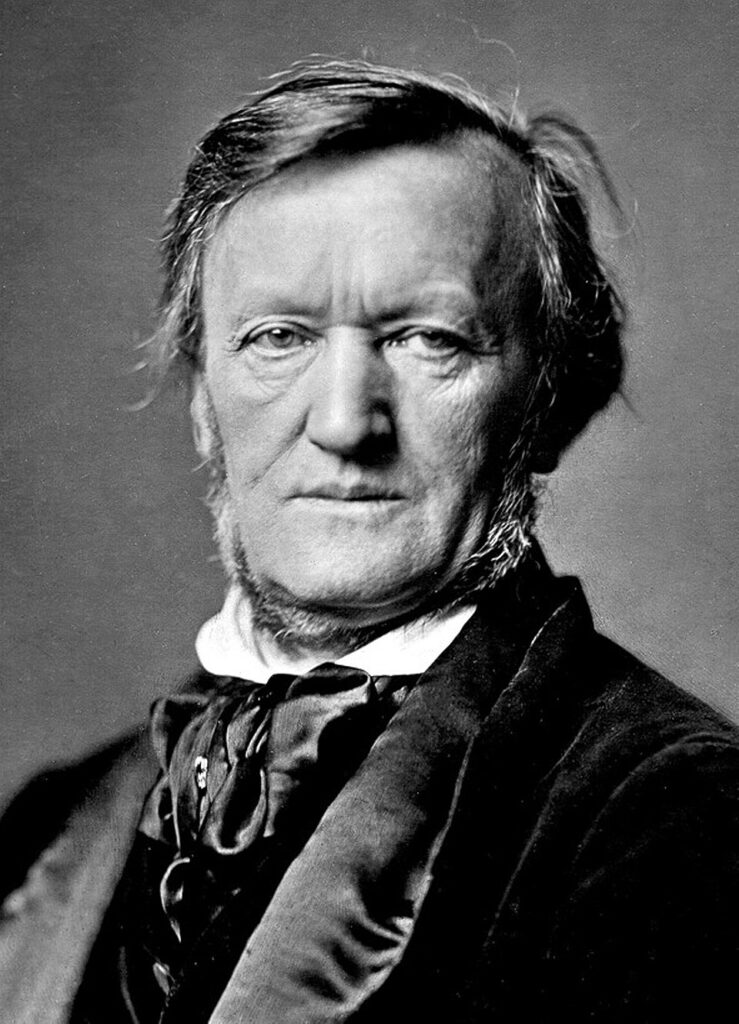
The term Götzen-Dämmerung is clearly a reference to the fourth and final part of Richard Wagner’s (1813–1883) 1876 opera Der Ring des Nibelungen. This part is titled Götterdämmerung in German and Twilight of the Gods in English.
Götterdämmerung – where Götter means “gods” and Dämmerung means “twilight” – is often translated into Norwegian as Ragnarok, which in Norse mythology is the name for the end of the world, but it is also translated more directly, as in English, as “the twilight of the gods”, that is, their imminent demise – which, in line with the Norwegian translation of Ragnarok, is meant to signify “the fall of the gods”. The Norse ragnarǫkr is a compound word consisting of ragna, from regin, “gods”, and rǫk, “development, fate”.

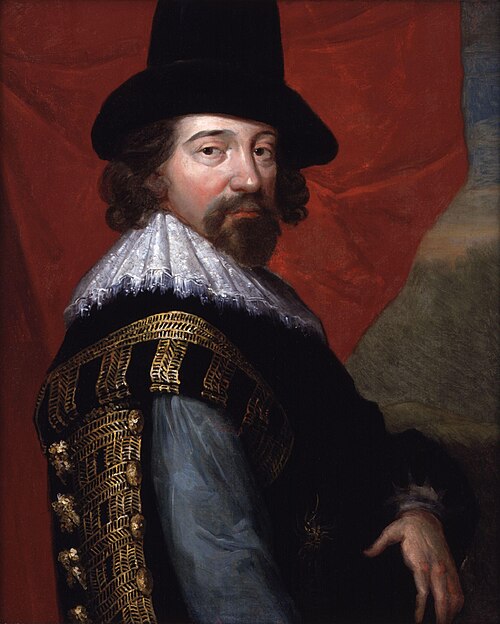
In his 2007 article “Friedrich Nietzsche and the Shakespeare Authorship Controversy”, Robert Sean Brazil refers to Walter Kaufmann, who, in his 1950 book Nietzsche, Philosopher, Psychologist, Antichrist, published in 1950, claims that Nietzsche was inspired to use the term Götzen/idol by Francis Bacon’s (1561–1626) essay Novum Organum from 1620.3 Here, Bacon lists what he calls The Four Idols, or four widespread prejudices that hinder free scientific inquiry. Wikipedia lists them as follows:
When Nietzsche uses the word Götzen rather than Götter, he wishes to emphasise that what he is writing about is not a god, but a false god, an idol. For Nietzsche, it is therefore a false god, an idol, that falls. And this idol is the God of Christianity.
- Idols of the Tribe (Idola tribus): This is humans’ tendency to perceive more order and regularity in systems than truly exists, and is due to people following their preconceived ideas about things.
- Idols of the Cave (Idola specus): This is due to individuals’ personal weaknesses in reasoning due to particular personalities, likes and dislikes.
- Idols of the Marketplace (Idola fori): This is due to confusion in the use of language and taking some words in science to have a different meaning than their common usage.
- Idols of the Theatre (Idola theatri): This is the following of academic dogma and not asking questions about the world.4
When Nietzsche uses the term Götzen, it is to present Christianity as a prejudice we should rid ourselves of in order to free our minds.
Another thing that made me suspicious of Bathory’s Nietzsche quote was the spelling mistakes and the odd punctuation. The first sentence reads “O, what harm do we not bring upon ourself”, where the last word should have been ourselves. It is doubtful whether Nietzsche, or a translator of Nietzsche, would have written “Man will need to ask herself”! God is written as a noun – “god” – and not as a proper noun (with a capital letter). There are also strange gaps in the punctuation, and a great many full stops after “truly”, something I have not seen occur in Nietzsche’s texts.
To check whether the quotation does in fact appear in Nietzsche’s collected works, I selected a number of key words and phrases, translated them into German, and searched the corpus as presented in the Digitale Kritische Gesamtausgabe on the Nietzsche Source website (http://www.nietzschesource.org/).
Central to this is the phrase “Twilight of the Gods” at the very end of the quotation. There are 21 passages in 20 different texts in which Nietzsche uses the phrase “Götterdämmerung”. In his letters, he most often uses the phrase in contexts referring to Wagner’s opera Der Ring des Nibelungen, which premiered in 1876, five years after 1871.
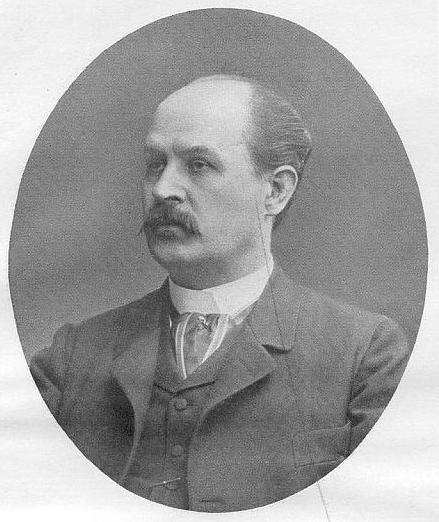
In a letter to his fellow philologist Erwin Rohde (1845–1898) dated 23 November 1871, Nietzsche writes of Wagner that “Der zweite Akt der Götterdämmerung ist vor 3 Tagen fertig geworden.” (The second act of Götterdämmerung was completed three days ago.),5 which shows that Nietzsche was already familiar with this part of the work by 1871.
In fact, the term “Götterdämmerung” first appears in Nietzsche’s writings as early as 1869, in a fragment,6 though at that time it was used as a noun to refer to the age of Euripides. Euripides (c. 485 – c. 406 BCE) was the last of the three great tragic poets of ancient Greece, following Aeschylus and Sophocles.
Apart from the letter to Erwin Rohde, the term “Götterdämmerung” appears once more in a text from 1871, namely in the essay Socrates and the Greek Tragedy dated 18 June 1871. Here, Nietzsche comments on the Greek tragedian Aeschylus (c. 525 – c. 456 BCE) and his (presumed) tragedy Prometheus Bound, about the Greek titan Prometheus who defied the gods and gave fire to mankind. Prometheus was punished by Zeus by being chained to two pillars and having his regenerating liver pecked out by Zeus’s eagles.
In the same way, I tried my hand at translating terms such as modern/modern, madness/Wahnsinn/Verrücktheit/Irrsinn/Tollheit, freedom/liberty/freiheit, laws of nature / Naturgesetze, og repentance/Buße/Reue), but to no avail.
I can therefore say with 99 per cent certainty that the quote was not written by Nietzsche, and was therefore most likely written by Forsberg himself.
Analysis of the content of the quotation
What about the content and meaning of the quote – can it be attributed to Nietzsche?
Let us first break the quotation down into its individual sentences, which we will then number for the sake of clarity:
| S1 | O, what harm do we not bring upon ourself in search of the utter freedom in this modern age of madness. |
| S2 | Man will need to ask herself: – “now that we seek to record all our origin, we have also proven that god is not. |
| S3 | Who will now tell us so that we will listen, when we have broken the last of the laws of nature when we shouted ” Freedom. Liberty ” and held nothing against the elimination of the first “? |
| S4 | One may indeed fear this era, for it is not only the moment of truth and of repentence. |
| S5 | For it is also truly……….. The Twilight of the Gods! |
The first sentence (S1) – “O, what harm do we not bring upon ourself in search of the utter freedom in this modern age of madness” – expresses a lament over humanity’s pursuit of absolute freedom, and the fact that a freedom which was meant to liberate us has instead become a source of harm and destruction. The phrase “this modern age of madness” suggests a modern era in which religion and morality have dissolved into a chaotic ideal of freedom.
S2 states that “Man will need to ask herself: – “now that we seek to record all our origin, we have also proven that god is not.” This statement points to the role of modern science and historiography in abolishing God. The moment humankind charts its origins – biological, historical, psychological – we have removed the need for a divine creation. The phrase “proven that god is not” is a direct echo of Nietzsche’s decree that God is dead.
S3 reads as follows: “Who will now tell us so that we will listen, when we have broken the last of the laws of nature when we shouted ” Freedom. Liberty ” and held nothing against the elimination of the first “?” Both “freedom” and “liberty” seems to refer to the same thing, but there is a distinction in meaning between the two terms.
The sentence first claims that we have broken the last of the laws of nature by attempting to claim freedom for ourselves. In the second part of the sentence, there is an unclear reference. Is it referring to the first of the laws of nature? To the laws of nature as such, and that we have done nothing to preserve them? Or is it referring to the fact that we have retained liberty, and through that removed freedom? In such an interpretation, we must first understand the distinction between freedom and liberty.
Liberty can be defined as “the state of being free in society from oppressive restrictions imposed by authorities on one’s lifestyle, behaviour or political views”. Liberty concerns the right of individuals to make their own choices without interference from the government or other institutions. Fundamental freedoms such as freedom of expression, freedom of religion and freedom of the press are encompassed within this form of liberty. This is a freedom that limits the state’s power over the individual.
Freedom, on the other hand, refers to an individual’s ability to act or think as they please without being hindered by external forces. It is often associated with the idea of self-determination and the pursuit of happiness. Freedom is a more general concept that can be applied to a wide range of activities, from economic freedom to personal freedom. This is a more general freedom from any external influence on the individual.
It may seem strange to claim that we have retained liberty, and in doing so have eliminated freedom. After all, the state’s moderate restrictions are more likely to lead to greater personal freedom. This seems an implausible interpretation, and I am more inclined to believe that what is intended is a breach of the laws of nature through the pursuit of absolute freedom.
The question posed in S3 must be: When, in our intoxication with freedom, we have rejected the laws of nature, who then has the authority to guide us? The expression “elimination of the first” may refer to the first law, that is, the divine or natural constitution (the order of life, creation, perhaps God himself). Mankind has cried out “Freedom!”, but in the process has destroyed the very foundation of its existence.
S4 asserts that “One may indeed fear this era, for it is not only the moment of truth and of repentence.”, and S5 asserts that “For it is also truly……….. The Twilight of the Gods!”. There is reason to view these statements together because they seem to assert that in this modern age of madness (S1), it is not merely a time for repentance and truth, but also a time when the gods are disappearing. It may seem as though it is the fall of the gods that is beginning to dawn on us, and that this is what we should repent of.
“The Twilight of the Gods” refers directly to the end of the world in Norse and Germanic mythology, where the gods perish and a new world is to emerge. But in this text, the expression is used figuratively: our age is the “twilight of the gods” because all gods, authorities and moral absolutes have fallen.
This text seems to be quite far removed from what Nietzsche stood for. We shall set this suspicion aside for now and instead explore a clue that might make the meaning of this quotation easier to understand, a clue provided by the aforementioned José Luis Cano Barrón. He writes:
I suppose Quorthon did that quote, and, in my opinion,. is very related and connected to the lyrics of the song “Twilight of the Gods”7
The Twilight of the Gods
According to Barrón, there is therefore a semantic connection between the quote and the title track “Twilight Of The Gods” on the album Twilight Of The Gods. Let us look at the lyrics to this song, with the verses broken down and numbered. The lyrics are reproduced differently across various releases, i.e. with a number of spelling mistakes which I do not know whether they are from Forsberg himself or have crept in during the production of the cover. These variations are marked, and I have used the version of the lyrics that makes the most sense in context.
| “Twilight Of The Gods” | |
| V1 | |
| VL1 VL2 VL3 VL4 | There is a serpent in every Eden Slick as grease and cold as ice There is a lie in every meaning Rest assured to fool you twice |
| V2 | |
| VL5 VL6 VL7 VL8 | In this age of utter madness We maintain we are in control (And)* ending life before deliverance While countries are both bought and sold |
| V3 | |
| VL9 VL10 VL11 VL12 | Holy writings** (and)* hokus-pokus Blaze of glory and crucifix Pre-priced*** costly credit salvation# TV-preachers and dirty tricks |
| V4 | |
| VL13 VL14 VL15 VL16 | Don’t trust nobodyIt will cost you much too## much Beware of the dagger It (will)### caress you at first touch |
| V5 | |
| VL17 VL18 | O, all small creatures It is the twilight of$ the gods |
| V6 | |
| VL19 VL20 VL21 VL22 | When the foundations to our existence Begins to crumble one by one And legislations protects its breakers And he who was wrong but paid the most won |
| V7 | |
| VL23 VL24 VL25 VL26 | Even the gods of countless religions Holds no powers against this tide Of degeneration because we have now found That there is no throne$$ up there in the sky |
| V8 | |
| VL27 VL28 VL29 VL30 | Run from this$$$ fire It will burn your very soul Its flames reaching higher Come% this far there is no hold |
| V9 | |
| VL31 VL32 VL33 | O, all small creatures It is the twilight of$ the gods (Twilight of the gods) |
- * It is written “whittings” in one version.
- ** It is added “and” in one version.
- *** It is written “prepried” some places, otherwise “prepriced” and “pre-priced”.
- # It is written both “salvation” og “salvations”.
- ## Some places there is written “to”.
- ### Added in one version.
- $ It is written “if” some places.
- $$ It is written “thrones” some places.
- $$$ It is written “the” some places.
- % It is written “comed” some places.
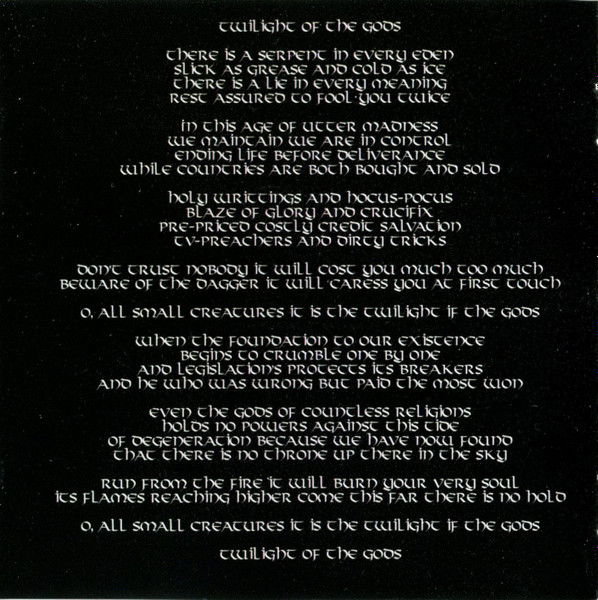
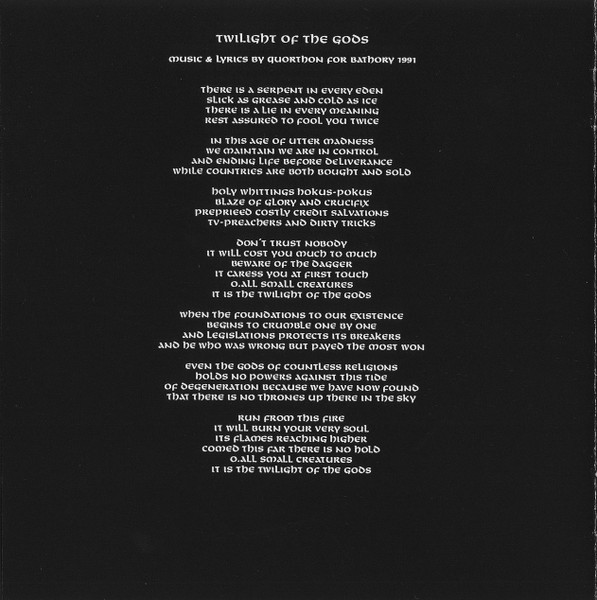
“There is a serpent in every Eden / Slick as grease and cold as ice”
The snake in V1/VL1 is a classic symbol of evil, deceit and temptation, and is used here as a metaphor to suggest that no existence is entirely free from such things. The description of the snake as slippery as grease and cold as ice in V1/VL2 suggests that this evil is cunning, crafty and emotionless.
“There is a lie in every meaning / Rest assured to fool you twice”
V1/VL3 highlights the uncertainty inherent in all claims, and even what we think we understand can deceive us (V1/VL4). The text suggests a world in which illusion and deception are fundamental.
“In this age of utter madness / We maintain we are in control”
V2/VL5 & VL6 express a classic pessimistic view: that humans believe they control the world, but society is chaotic, corrupt and unpredictable.
“(And) ending life before deliverance / While countries are both bought and sold”
V2/VL7 & VL8 depict a time when human life (through abortion) and nations are regarded as having no intrinsic value, governed by power, money and corruption.
“Holy writings (and) hokus-pokus / Blaze of glory and crucifix / Pre-priced costly credit salvation / TV-preachers and dirty tricks”
V3 is a critique of religion and commercialised faith: sacred texts and symbols have lost their power, and religious leaders manipulate the faithful for their own gain.
“Don’t trust nobody / It will cost you much too much / Beware of the dagger / It (will) caress you at first touch”
In V4, we find a warning not to be taken in: what at first seems safe may prove fatal.
“O, all small creatures / It is the twilight of the gods / When the foundations to our existence / Begins to crumble one by one”
In V5/VL17, humans are referred to as pitiful little creatures, and V5/VL18 is a direct reference to Ragnarök/Götterdämmerung, signalling the end of the old gods’ power. Human existence is therefore fundamentally threatened, as stated in V6/VL19 & VL20.
“And legislations protects its breakers / And he who was wrong but paid the most won”
In V6/VL21 and VL22, the narrative continues to depict a time and a society that are corrupt.
“Even the gods of countless religions / Holds no powers against this tide / Of degeneration because we have now found / That there is no throne up there in the sky”
V7 states that no religion can halt humanity’s self-inflicted decline. We have now discovered that there is no heavenly throne and that divine power is an illusion.
“Run from this fire / It will burn your very soul / Its flames reaching higher / Come this far there is no hold”
In V8, the decline is described as a fire that will consume us. The fire represents chaos, destruction, and the moral and existential crisis that is inevitable. V9 reiterates that this is the fall of the gods, reinforcing the sense of inevitable doom.
The text is an apocalyptic poem about humanity’s own destructiveness and the fall of the gods in a world full of deceit and illusions, where humanity believes it can control everything, yet is steering itself towards its own downfall. Religion, morality and tradition have lost their power: the foundations of existence are crumbling, and no higher power can prevent it. The result is a symbolic and cosmic end of days – where both the gods and mankind fall.
“Twilight Of The Gods” tells of a society in decline, which corresponds with the quote attributed to Nietzsche. Almost identical descriptions are used in both texts: “in this modern age of madness” in the quote (S1), and “In this age of utter madness” in the song (V2/VL5).
One possible interpretation of Forsberg is that we are unable to halt this decline (V7) because we no longer have the gods of religion to stem it (V6). This decline manifests itself through unethical social structures that favour criminals and the rich (V5). Religions are also corrupted by the pursuit of money (V3). Forsberg urges us to flee before we allow our souls, our morals, to be corrupted, for the gods are falling.
It would therefore appear that, in this interpretation, Forsberg believes that the gods, worshipped with respect, have served as a guarantor of our morality and of the maintenance of sound social structures. It would seem that it is absolute moral freedom that corrupts. In that respect, the previously rejected interpretation of S3 may once again seem plausible: through a highly liberal social structure, we have lost the foundation of our personal freedom.
In a more nuanced interpretation of the lyrics, we might say that Forsberg sees an end-time that is about to unfold, and that the lyrics are an observation that the world we live in is in the midst of an end-time, an end-time that can be traced in society’s general moral decline. True values are disappearing, and we are living on the surface of something false. In this interpretation, the lyrics offer no solution, nor do they suggest that we should cling to the gods, for the gods are dead. We should note that in other lyrics on the album, Forsberg nevertheless pays homage to the Norse gods, and seems to look back in time to a Norse era free from all the inauthenticity that plagues us in our present-day society. There is nevertheless little doubt that Forsberg was not particularly fond of Christianity. In a German interview from 1994, he says the following about the new album Bathory have released, Requiem (1994):
REQUIEM is consistently about death in all its forms: murder, the Holocaust, spiritual death… plus a bit of harsh criticism of Christianity—I can’t get away from it.8
Both texts use the phrase “The Twilight of the Gods” as a powerful image drawn from Norse mythology, in which the gods meet their doom in an epic apocalypse that also heralds a new beginning (Ragnarok). In the texts, this can be interpreted as a symbol of society’s traditional values and order collapsing under the pressure of modernity’s demands and the quest for freedom at the individual level. Thus, the lyrics become both a reflection on the human quest for freedom and its consequences, and a warning about the dangers of an age in which old authorities and natural laws are undermined and fall. The lyrics fit into a philosophical and mythological tradition where the end times are not merely destructive, but also hold the potential for renewal following the collapse. This is a central tenet of black metal ideology, known as millenarianism. As I write in the book Snø og granskog: Språk, ideologi og nasjonalromantisk raseri i norsk svartmetall (Snow and Spruce Forest: Language, Ideology and National Romantic Rage in Norwegian Black Metal, 2023):
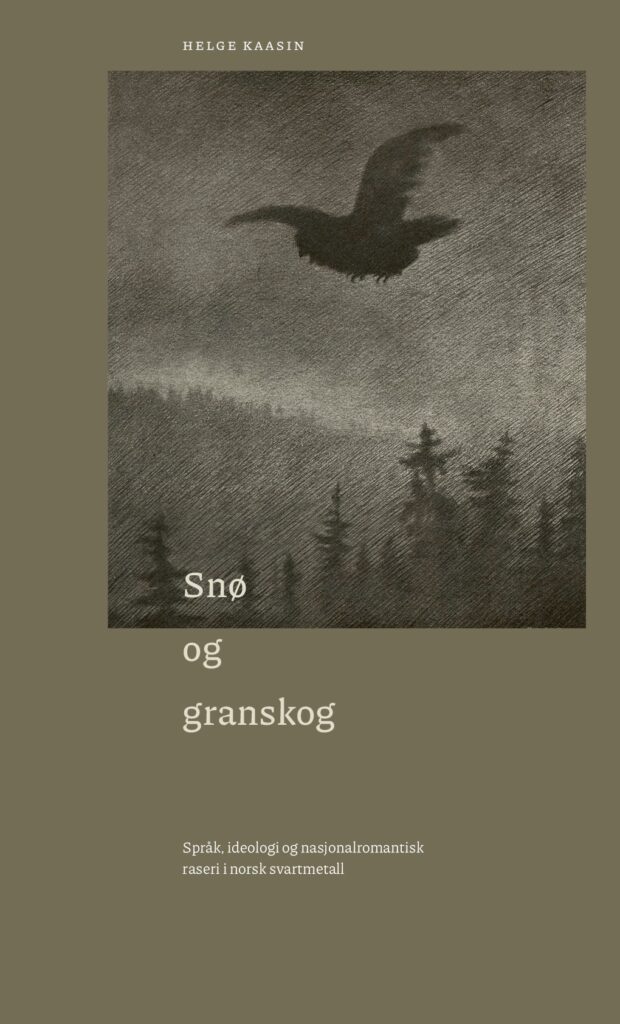
This mindset involves a belief in a future, total transformation of the world through the end of the world and the dawn of a new age. The new world order is intended to free us from the limitations and decay of the present world. For black metal, it is the pre-Christian, Norse era that serves as the model for the new age, which will sever the chains of Christianity, lead the black metal character out of the suburban rut and re-enchant the world.9
This latter, more subdued interpretation is partly in line with Nietzsche. But Nietzsche goes further in a godless direction. The loss of the divine guarantor gives humanity an opportunity to finally free itself from the yoke of religion and find its own path, one that springs from the self. Although Forsberg seems to express something similar in the song “To Enter Your Mountain” from the same album – “Blind fools who see only what they tell you to / Open up your eyes you might see it too / See there is a lot to see within you too / Don’t be like the rest and let them take it from you” – this does not come across either in the false Nietzsche quote or in the song “Twilight of the Gods”.
If we return to the false Nietzsche quote, one might still ask: who is it that utters these admonishing words?
O, what harm do we not bring upon ourself in search of the utter freedom in this modern age of madness. Man will need to ask herself: – “now that we seek to record all our origin, we have also proven that god is not. Who will now tell us so that we will listen, when we have broken the last of the laws of nature when we shouted ” Freedom. Liberty ” and held nothing against the elimination of the first “? One may indeed fear this era, for it is not only the moment of truth and of repentance. For it is also truly……….. The Twilight of the Gods!
It is not Nietzsche, nor does it resemble him semantically. In that case, he is being polemical in his warning about this new freedom we have acquired in the absence of God. Nor does it really seem to suit Forsberg, other than as a polemical warning. That it is a polemical warning is supported by the clause “for it is not only the moment of truth and of repentance”. The twilight of the gods is the moment when we realise, as a truth, that the gods are gone, and that we ourselves stand as guarantors of our own morality and our own lives. We can regret, or we can, like Nietzsche, seize the opportunity.
When God dies, according to Nietzsche, the foundation underpinning traditional Christian values is swept away, and those values lose their truth. This opens the way for a new philosophical stance: nihilism, from the Latin nihil, meaning “nothing”. For the nihilist, there are two ways forward: to collapse along with the old values, or to build a new foundation. Nietzsche advocates the latter. Against passive nihilism, which resigns itself to worthlessness, he sets active nihilism – a celebration of the dissolution of the old religious and moral frameworks of interpretation.
Like Forsberg, Nietzsche argues that modern knowledge has rendered God superfluous. When God disappears, so too does the foundation for morality and meaning. But it is not the world that is devoid of value – it is our concepts of the world. Values are not given, neither divine nor natural – they are ascribed by human beings, and can therefore be replaced. To overcome nihilism, one must live through it, and then create one’s own values – values that spring from the body and affirm life. This is active nihilism.
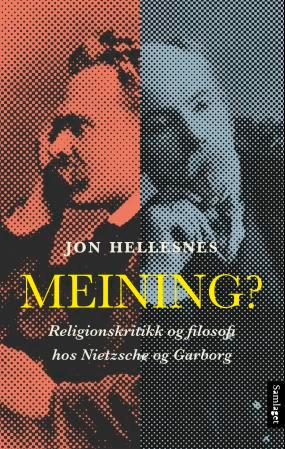
In his 2014 book Meining? Religionskritikk og filosofi hos Nietzsche og Garborg (Meaning? Criticism of Religion and Philosophy in Nietzsche and Garborg), the philosopher Jon Hellesnes writes that “an active nihilist pushes nihilism to its very limits in order to make it transcend itself. He seeks to overcome nihilism by bringing it to its fulfilment.”10
Nietzsche seeks the truth and finds that truth itself is an illusion; it is merely a will for something to be true. Thus, the “will to power” is the true metaphor of life: all life seeks to expand, to grow stronger and to realise itself. But this will can also turn in on itself and become a will to nothingness – to decadence, an expression of a broken will to life.
In my view, black metal encompasses both forms of nihilism: both an active nihilism that shatters old values and seeks new ones, and a passive nihilism that turns towards death, emptiness and transgression. Nevertheless, a combative spirit is usually evident, and black metal as an ideology seems to lean more towards active nihilism.
1349 express this active nihilism in the title track of their 2005 album Hellfire:
My icon is the cross of Peter
I turn the aeons
I destroy dead dogmas
And create the paradigms
Of the new order.11
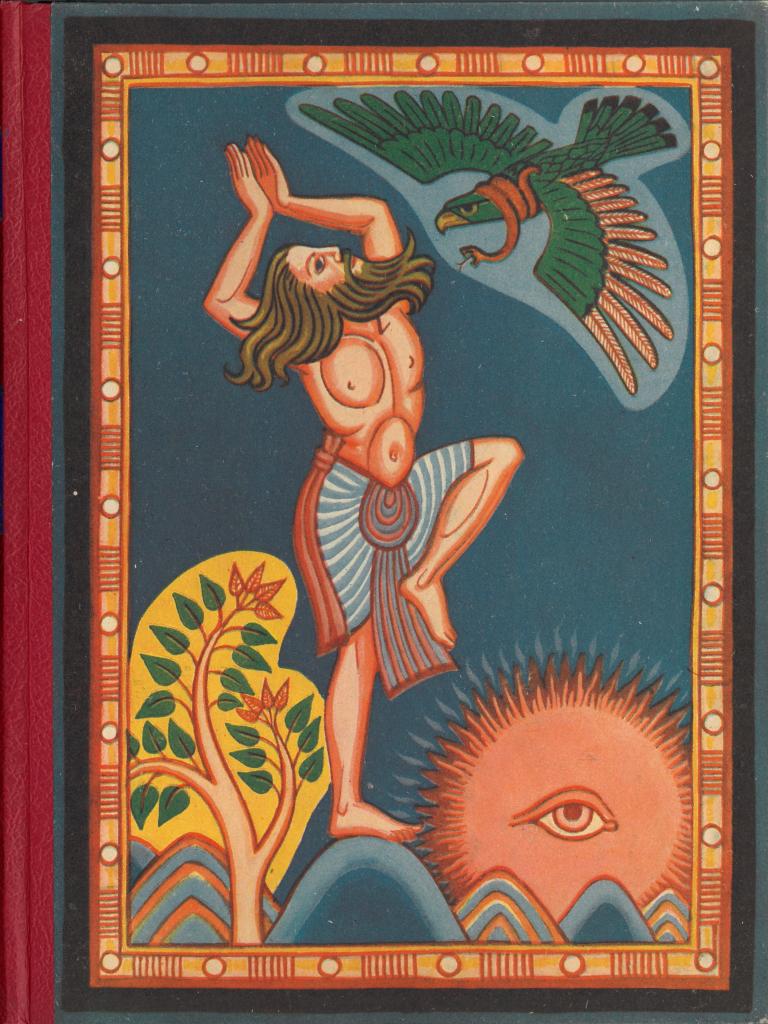
Nietzsche believed that the old morality was levelling and oppressive – it treated everyone equally and denied human individuality. His Zarathustra – from the book Thus Spoke Zarathustra (1883–1885) – advocates moral individualism: each and every person must find their own path. The historian of ideas Trond Berg Eriksen writes the following about Nietzsche’s moral individualism in his 1989 book Nietzsche og det moderne (Nietzsche and the Modern Age):
One must hold one’s own will aloft as a law. Even if the loneliness of existing outside the community of norms becomes unbearably heavy, this is the only way out of “mass egoism”.12
Here we hear not only the echo of Nietzsche’s words, but also of another figure: the esotericist Aleister Crowley. He founded the religion of Thelema, from the Greek for will, and formulated its highest law: “Do what thou wilt”.13
Crowley sought union with the divine through magick: “the art of bringing about change in accordance with one’s will”. Nietzsche went deeper: his freedom was radical, solitary and devoid of any divine foundation.
Nevertheless, they share the idea of self-creation – that people must find their own way in a world without fixed points of reference. An idea that has appealed to many young, searching and rebellious souls – those who needed spiritual guides in their dark rebellion.
In a conversation in 2008 with his publishing colleague and Ulver’s lyricist and jack-of-all-trades Jørn Henrik Sværen, editor and publisher Audun Lindholm succinctly sums up what he believes black metal is all about:
In a way, black metal is about what Nietzsche called active nihilism – rejecting idealism and recognising the potential within oneself. One quickly tires of all the nature mysticism and contempt for modernity, but there is also a genuine desire to confront the loss of meaning and re-enchant the world in this music. The hairs still stand on end on my arms when I listen to the early albums by Emperor and Darkthrone. And Ulver.14
The seeds of this active nihilism can already be found in Bathory’s album Twilight Of The Gods.
Nietzsche in black metal
As mentioned earlier, the black metal scene was inspired by Nietzsche, and he was involved right from the very beginning.15
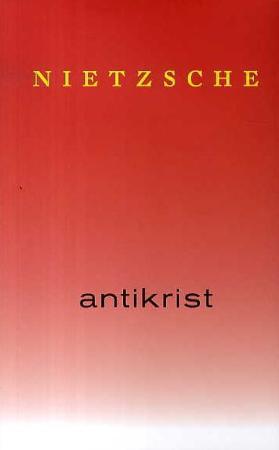
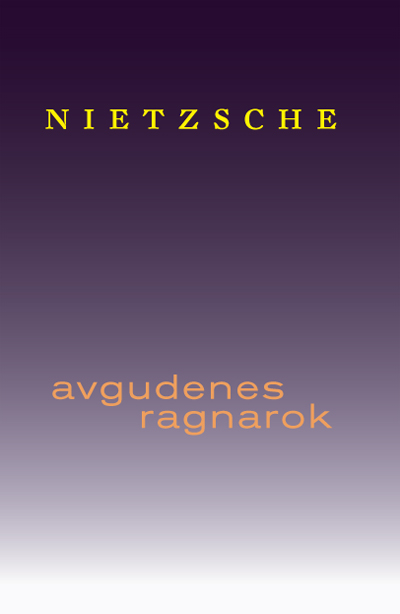
Varg Vikernes claims that he read Nietzsche. Here is an excerpt from a 1995 interview with the Nietzsche-inspired Austrian musician Gerhard ‘Kadmon’ Petak:
I have read «Jenseits von Gut und Böse» and parts of «Antichrist» but I have not read other books by Nietzsche.16
The title of the Bergen-based band Gorgoroth’s 2003 album Twilight of the Idols (In Conspiracy with Satan) is clearly inspired by Nietzsche’s book Twilight of the Idols, or, How to Philosophize with a Hammer. The lyrics were written by Gorgoroth’s vocalist at the time, Kristian Eivind “Gaahl” Espedal.
As mentioned, in Nietzsche’s book Christianity comes in for a thorough dressing-down, not only as a religion but also as the dominant normative value system in the Western world. Nietzsche portrays Christianity as an inversion of nature and as hostile to life itself; a religion of pity that elevates what is sickly and weak above that which is full of life and vitality. This fits well with Gorgoroth’s project.
The link Gorgoroth draws between the title and subtitle of the release Twilight of the Idols (In Conspiracy with Satan) is one that Nietzsche himself had already made. His book Twilight of the Idols was a popularisation of the ideas he developed in the book The Antichrist, which he also wrote in 1888, just before he fell into the paralysing darkness of madness in January 1889. The title can be interpreted both as “the Antichrist” in the form of Satan, or as “the anti-Christian”. Twilight of the Idols was written almost simultaneously with The Antichrist. Both books are a wellspring of violent, vague, and seemingly contradictory aphorisms. A perfect place to look for inspiration for dark black metal lyrics.
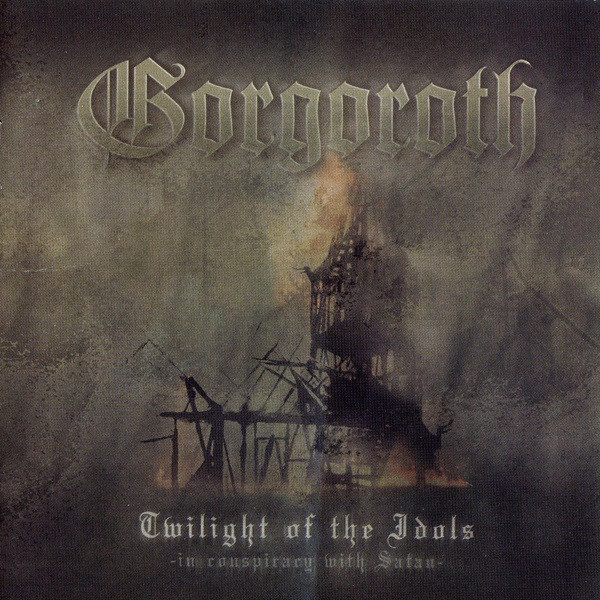
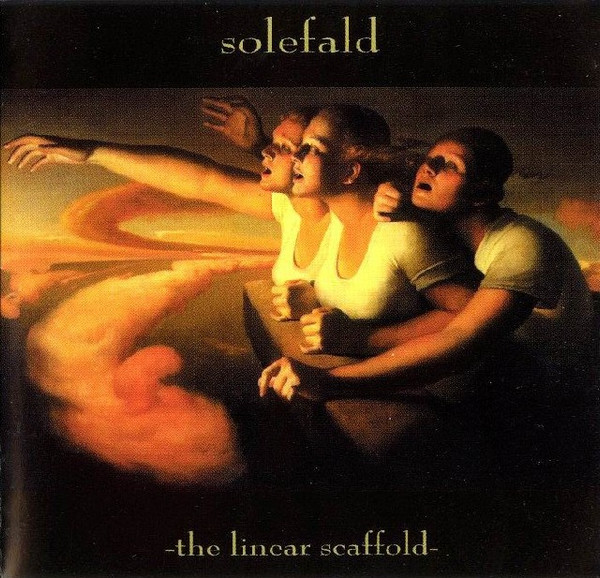
Gorgoroth’s engagement with Nietzsche’s philosophy dates back further than 2003 – to before Gaahl joined the band – with lyrics written by guitarist Roger “Infernus” Tiegs. The titles of the 1996 release Antichrist, and Destroyer, or About How to Philosophize With the Hammer from 1998 speak for themselves in their references to Nietzsche’s books The Antichrist and Twilight of the Idols, or, How to Philosophize with a Hammer.
Solefald, led by philosopher, author and poet Cornelius Jakhelln, celebrates philosophical reflection and lists philosophers in the track “Philosophical Revolt” from their 1997 album The Linear Scaffold. Nietzsche is among the philosophers mentioned:
Confucius, Lao-Tse,
Socrates, Plato,
Schopenhauer, Nietzsche,
Sartre & Beauvoir

Defend the name of nobility itself
The art of intellectual reflection17
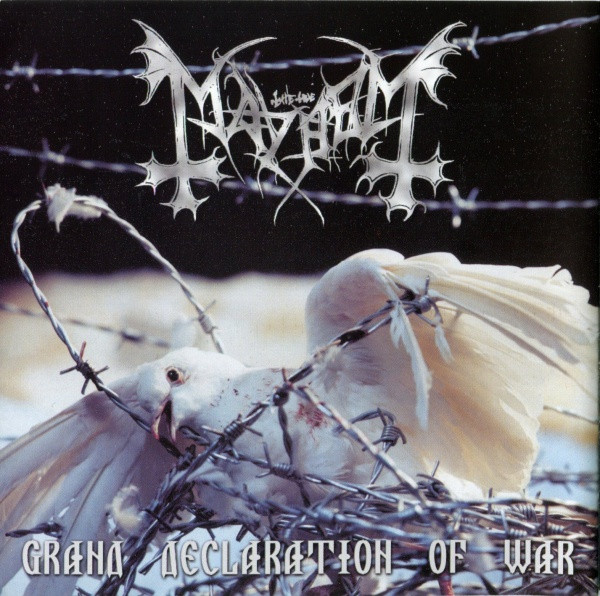
Mayhem’s Grand Declaration of War from 2000 is based on the writings of Nietzsche, and in particular on the two of his books most widely read and quoted within black metal: the aforementioned The Antichrist and Twilight of the Idols.
In The Twilight of the Idols, Nietzsche rejects the afterlife and asserts that the empirical world is the only one that exists. Both Plato’s theory of ideas and Christianity’s dualism between body and soul, and between the earthly vale of tears and the eternal bliss of heaven, are shattered by the philosophical hammer. Nietzsche himself called the book a great declaration of war, hence the title of Mayhem’s Grand Declaration of War.
The lyrics of the title track, however, are partly taken directly from the beginning of The Antichrist and not from Twilight of the Idols. The lyrics were written by Mayhem’s vocalist at the time, Sven Erik “Maniac” Kristiansen.
Christendom – religion of pity – God of the sick
We have discovered our way – we know the road
We have found the way out of millenia of labyrinth
Beyond the north – beyond the ice – beyond death
There was a thunderstorm in our air
The nature which we are grew dark
All that proceeds from weakness we loathe
We declare not peace – but war
We shall be unleashed now
From darkness we create light
Beware decaying humans
For we shall destroy
We are the way of milleniums to come18
Nietzsche writes in the first part of The Antichrist:
—Let us look each other in the face. We are Hyperboreans—we know well enough how remote our place is. “Neither by land nor by water will you find the road to the Hyperboreans”: even Pindar, in his day, knew that much about us. Beyond the North, beyond the ice, beyond death—our life, our happiness…. We have discovered that happiness; we know the way; we got our knowledge of it from thousands of years in the labyrinth. Who else has found it?—The man of today?—“I don’t know either the way out or the way in; I am whatever doesn’t know either the way out or the way in”—so sighs the man of today…. This is the sort of modernity that made us ill,—we sickened on lazy peace, cowardly compromise, the whole virtuous dirtiness of the modern Yea and Nay. This tolerance and largeur of the heart that “forgives” everything because it “understands” everything is a sirocco to us. Rather live amid the ice than among modern virtues and other such south-winds!… We were brave enough; we spared neither ourselves nor others; but we were a long time finding out where to direct our courage. We grew dismal; they called us fatalists. Our fate—it was the fulness, the tension, the storing up of powers. We thirsted for the lightnings and great deeds; we kept as far as possible from the happiness of the weakling, from “resignation”… There was thunder in our air; nature, as we embodied it, became overcast—for we had not yet found the way. The formula of our happiness: a Yea, a Nay, a straight line, a goal….19
Like Mayhem, Nietzsche seeks to shatter the existing falsehood – Christianity – and replace it with a new era and a new kind of human. We also find this kind of catharsis and celebration of God’s death in Emperor’s work. Here is an excerpt from the track “My Empire’s Doom” from the 1992 demo Wrath of the Tyrant:
Your Lord's castle is gone.
His glory is no more,
and nothing can stop the purifying.20
This song was later rewritten, given the title “Beyond the Great Vast Forest”, and released on the band’s debut album, In the Nightside Eclipse, in 1994.
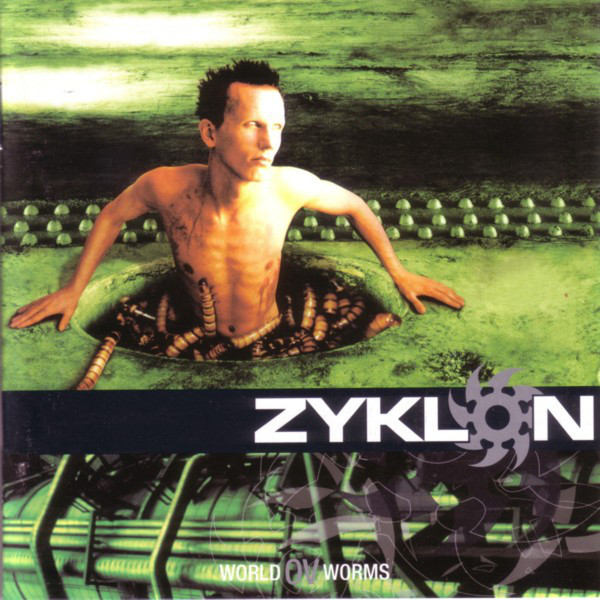
Bård “Faust” Eithun, the drummer in Emperor, spent nine years in prison following the murder of a gay man in Lillehammer in 1992. There he read Nietzsche and wrote lyrics for the Zyklon release World ov Worms (2001), which he released in collaboration with, amongst others, guitarist, former Emperor bandmate and church arsonist Tomas “Samoth” Haugen. The lyrics bear the mark of Nietzsche’s influence.
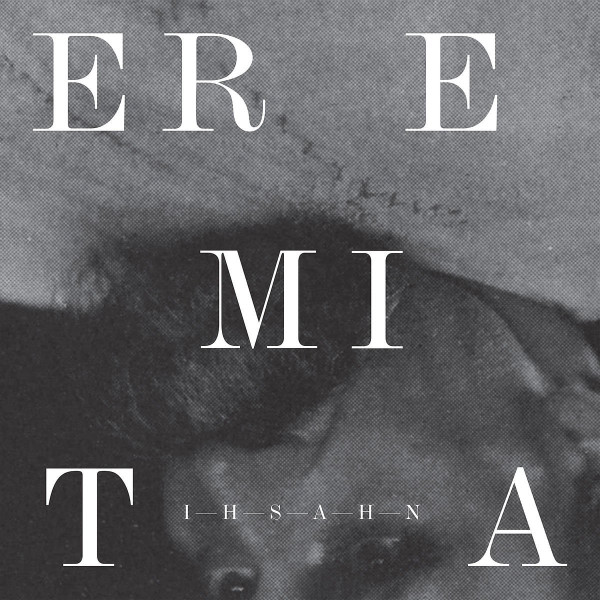
Vegard Sverre “Ihsahn” Tveitan, multi-instrumentalist and vocalist with Emperor, explains that throughout his solo career he has been deeply inspired by Nietzsche’s works. On the cover of the 2012 release Eremita we find one of the most famous images of the ageing and mentally ill Friedrich Nietzsche.
It seems Nietzsche has a star in the new black metal scene too. The Norwegian-Italian band Hammerfilosofi appears, in its name, to make a clear reference to Nietzsche’s Twilight of the Idols, or, How to Philosophize with a Hammer. On Bandcamp, the band’s Italian vocalist, Fuoco Cammina Con Me, says the following about the band:
We are taking Black Metal back to its primeval and genuine meaning and purpose. Hammerfilosofi is the cleansing fire that aims to eradicate every trace of the civilized, the harmless, and the mediocre. It is an instrument to initiate a violent cathartic inner journey – and a celebration of strength and vigor, of terror and strife, and of glorious death.21
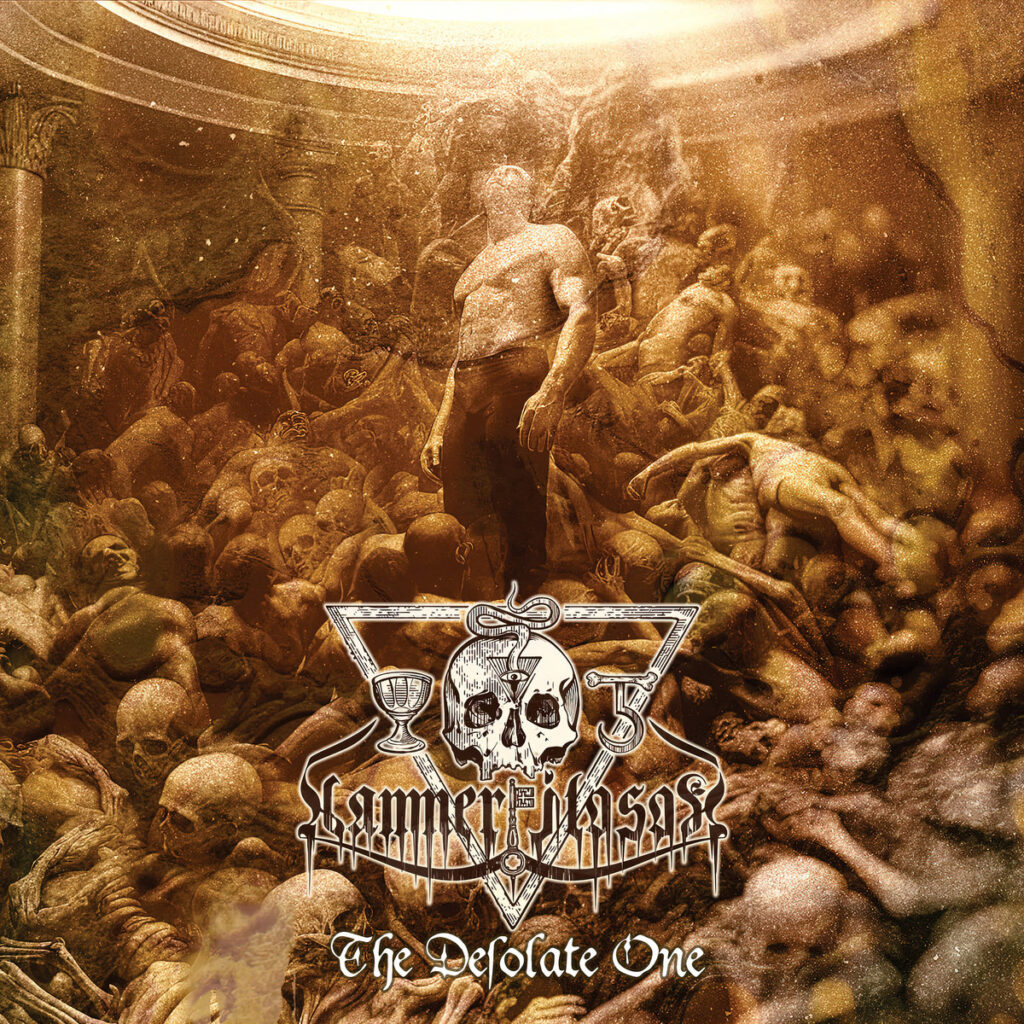
Speaking about their debut release, The Desolate One (2023), the band’s second member, the Norwegian multi-instrumentalist Noktifer, says the following:
It is a ceremonious depiction of the sulphurous path that may turn man into superman. Hopefully our work can contribute to Black Metal once again being both Feared and Revered!22
If not feared, then certainly revered, Thomas Börje “Quorthon” Forsberg and Bathory remain so in black metal circles. And even though the Nietzsche quote on the back cover of Twilight Of The Gods was not actually written by Nietzsche, Forsberg has probably inspired an entire musical genre to include the rebellious philosopher Nietzsche within the black circle.
Sources
Se Sources.
Notes
- José Luis Cano Barrón, in a conversation with me via Messenger, 12.08.2024. ↩︎
- Bathory, 1991, Twilight Of The Gods. ↩︎
- See Brazil, 2007, «Friedrich Nietzsche and the Shakespeare Authorship Controversy». ↩︎
- Wikipedia: https://en.wikipedia.org/wiki/Baconian_method. ↩︎
- See Nietzsche Source: http://www.nietzschesource.org/#eKGWB/BVN-1871,170. ↩︎
- See Nietzsche Source: http://www.nietzschesource.org/#eKGWB/NF-1869,1[59]. ↩︎
- José Luis Cano Barrón in a conversation with me via Messenger, 12.08.2024. ↩︎
- Müller, 1994, «Bathory», Metal Hammer Germany. ↩︎
- Kaasin, 2023, Snø og granskog: Språk, ideologi og nasjonalromantisk raseri i norsk svartmetall, p. 52. My translation. ↩︎
- Hellesnes, 2014, Meining? Religionskritikk og filosofi hos Nietzsche og Garborg, p. 23. ↩︎
- Excerpt from 1348, 2005, “Hellfire”, Hellfire ↩︎
- Eriksen, 1989, Nietzsche og det moderne, p. 78. My translation. ↩︎
- Crowley, 1909/2009, Lovens bok: Liber Al Vel Legis. My translation. ↩︎
- Sværen & Lindholm, 2008, p. 21. My translation. Both Sværen and Lindholm have a background in the black metal scene and as fanzine editors. ↩︎
- See Kaasin, 2023, pp. 43–60, on the relationship between the black metal scene and Nietzsche. ↩︎
- Petak, 1995. ↩︎
- Solefald, 1997, «Philosophical Revolt», The Linear Scaffold. ↩︎
- Mayhem, 2000, «Grand Declaration of War», Grand Declaration of War. ↩︎
- Nietzsche, 1895/1924, The Antichrist, p. 42. ↩︎
- Emperor, 1992, «My Empire’s Doom», Wrath of the Tyrant. ↩︎
- Bandcamp: https://hammerfilosofi.bandcamp.com/album/the-desolate-one. ↩︎
- Bandcamp: https://hammerfilosofi.bandcamp.com/album/the-desolate-one. ↩︎
Leave a Reply