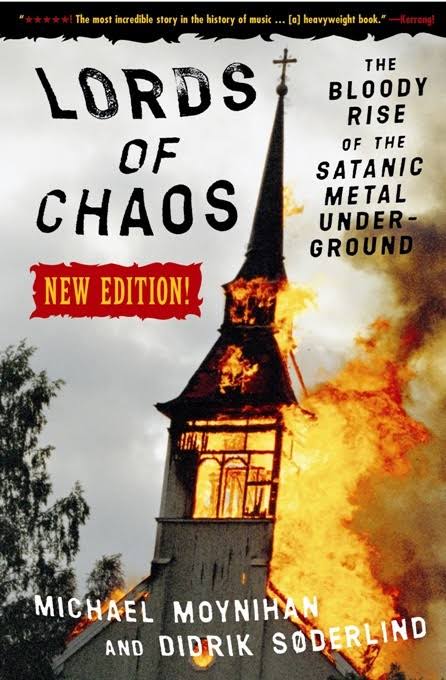
Moynihan & Søderlind claim in the book Lords of Chaos: The Bloody Rise of the Satanic Metal Underground, from 2003 (expanded edition of the first edition from 1998) that Burzum’s Kristian Vikernes changed his name to Varg Vikernes sometime between 1991 and 1992.1 It is this claim that I will examine in this article, and the question I will try to answer is: When did Kristian Vikernes actually change his name to Varg Vikernes?
This article attempts to answer a question that has received different answers in different sources. I do not come to any clear conclusion, so if you have any tips or input on what I have written, please contact me at helge@kaasin.no.
According to Vikernes’ book Vargsmål (1997), written in 1994, the name change took place on March 31, 1993:
The name Varg is not a name I chose for fun. I changed my first name from Kristian (ironically meaning Christ, while Christian means Christian) to Varg on the last day of March 1993, a.y.p.s. There is a deeper meaning behind the name that I will show here.
Vikernes, 1997, p. 47. My translation.
As we will see, this time indication is not necessarily completely precise.
Moynihan & Søderlind also believe that the choice of the name Varg is a kind of harbinger of Vikernes’ future fate. On August 10, 1993, he killed bandmate and Mayhem guitarist Øystein “Euronymous” Aarseth. The name change from Kristian to Varg was probably completed at the time of the murder, but it was not completed until Vikernes’ more serious criminal activities began in 1991. The change of first name was not necessarily carried out officially in the population register, but through public use of the name, as we shall see.
The name Varg Vikernes does not appear on Burzum releases until Filosofem which came out in 1996. Before that, he consistently used the artist name Count Grishnackh, also on Burzum’s second demo Reh / Demo 91. On this demo and on stationery from this time, he uses a kind of stamp where we also find the name C. Vikernes, followed by the address of a residence in Bergen.
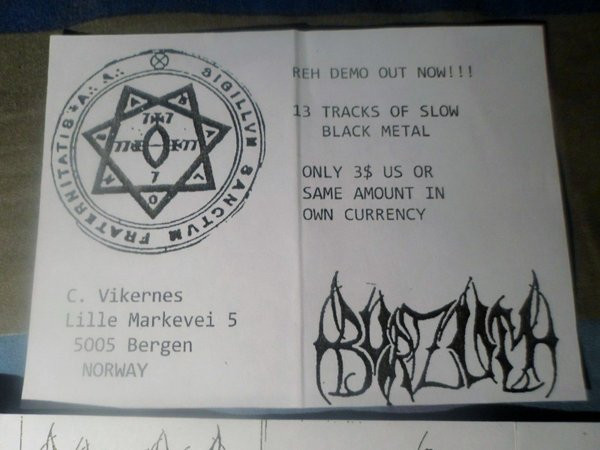
I have not been able to find out why he uses the initial C and not K, but there are two obvious possibilities. One could be that by C he means “Count”. At this time, as mentioned, he was already using the stage name Count Grishnackh. The other possibility is that he used C as an initial as an international way of writing the first name Kristian, i.e. as Christian. This is indicated by Discogs, which states the following:
With his old “Christian Vikernes, Lille Markevei 5, Bergen” address-stamp on the inlay.
Discogs: https://www.discogs.com/release/4888444-Burzum-Reh-Demo-91.
After the article was first published, Rune Nordheim Stafne wrote the following on Facebook as a comment on my sharing of the article:
C. Vikernes probably means Corpse Vikernes. I got a letter from him when he was still playing in Old Funeral. Then he signed with Corpse Vikernes.
Rune Nordheim Stafne on Facebook. My translation.
This is an interesting input, especially because it gives me an important clue: Check up what Vikernes calls himself on the Old Funeral releases. I find the cover of the 1991 EP Devoured Carcass on Discogs.2 On the back of the cover it is clear that Vikernes calls himself Christian.
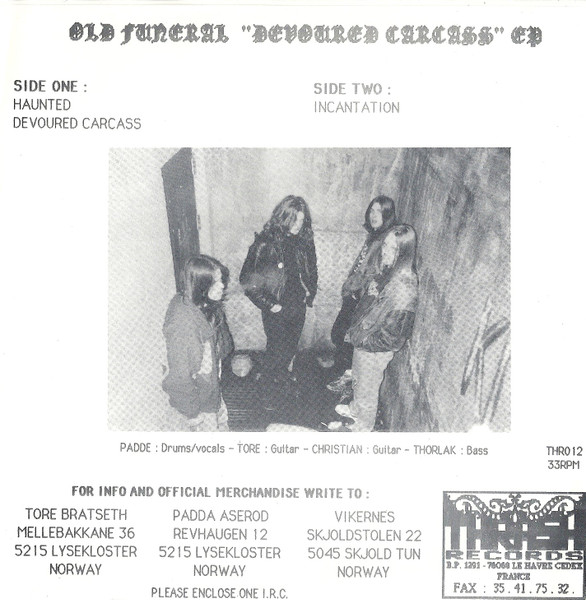
So we know that Vikernes called himself Christian for a period in the early nineties, probably to appear more international, or to make it clear internationally that the first name Kristian means “Christian”. It could also be that he is called Christian on the cover because this Matteus who was responsible for the cover of Devoured Carcass – probably from the French record label Thrash – thought that was how you spell Kristian. In any case, there is no indication that Vikernes used the first name Varg in 1991.
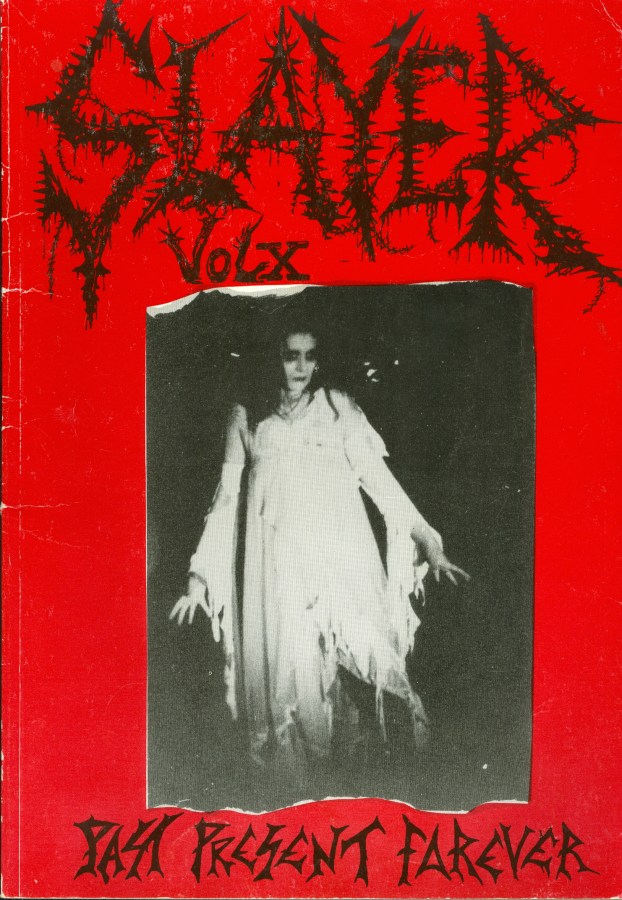
Burzum first appears in the fanzine Slayer, issue 9, from September 1992 in a review. There, Vikernes is referred to only by his stage name Count Grishnackh. Later in Slayer, issue 10, spring 1995, he is called Varg in an interview conducted from custody before the verdict on May 16, 1994. The interview states that he is awaiting the results of the trial.3
The first time Varg Vikernes is referred to as Varg in Norwegian newspapers is in VG on March 31, 1993 in connection with the publication of Kerrang! No. 436, March 27, 1993. The Norwegian newspaper VG writes:
The 20-year-old “Greven” [Count], Kristian Vikernes from Bergen, the man accused of setting two church fires in Bergen, has received the most attention. In the Kerrang report, he is called Varg Vikernes and Count Grishnacht.
Hansen, 1993, March 31, p. 45. My translation.
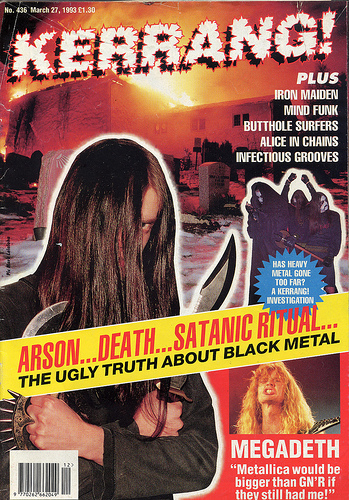
The interview with Aarseth and Vikernes in Kerrang!, titled “We are but slaves of the one with horns…”, begins as follows:
In Norway, the Satanic Terrorists, a sinister group of Neo-Fascist Devil Worshippers, are burning down churches to the ground. One of their number, Varg Vikernes, faces a prison sentence for arson. Jason Arnopp tells the story of Count Grishnackh…
Hotton & Elliot, 1993, March 27, p. 42. See also Vikernes, 1993b.
On his website Burzum.org, Vikernes lists the following interviews he did for magazines and fanzines before the aforementioned Kerrang! interview:4
- Circle of The Impious Mortals, 1991.
- Orcustus – The Shadow Of The Golden Fire, 1992.
- Putrefaction, 1992.
- Desecrater, 1992.
- Forest of N’gai, 1992.
- Charontaphos, 1993.
He is not called Varg Vikernes in any of these interviews, only Count/Grev Grishnackh. The Kerrang! interview is therefore the first interview where he is called, or calls himself Varg Vikernes. However, the magazine was published on March 27, 1993. This means that the interview must have taken place some time before. We will come back to that shortly, but first we will go back in time a little.
On 20 January 1993, the Norwegian newspaper Bergens Tidende wrote an article entitled “Djevledyrkere tar ansvar for åtte kirkebranner” (Devil worshippers take responsibility for eight church fires). Vikernes is the anonymous source interviewed by journalist Finn Bjørn Tønder. Vikernes is not mentioned by name, but is referred to as “a Bergen resident of around 20 years” and as “the devil worshipper”.5 The same evening that the article was published, Vikernes was arrested and taken into custody by the police, suspected of setting two churches on fire in Bergen. At this time, there had been a number of church fires, a total of 13 in fact, up to and including 2 January. On 29 January, an unsuccessful attempt was made to set Leveld Church in Ringerike on fire. This was followed by 32 more church fires until 21 December 1997.
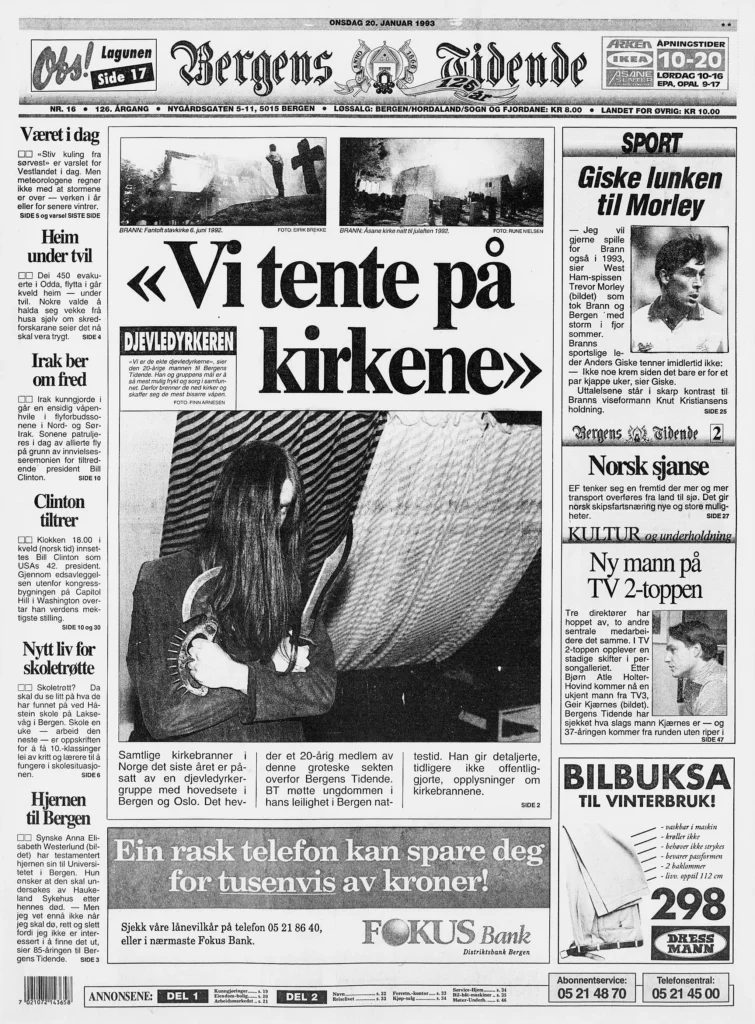
A week after the famous self-revelation in Bergens Tidende, on January 26, Tønder published another article about the satanic wave that was sweeping the country. The article was titled “Bløff eller utrolig sant?” (Hoax or incredibly true?):
Together with three others, I met this “Count” on a rainy night about a week ago. And I saw him as an imaginative, spoiled puppy who had been allowed to play for too long without control.
Tønder, 1993, January 26, p. 6. My translation.
Vikernes was referred to as Greven (the Count) in Norwegian newspapers ever since he was arrested and he was linked to Burzum and the stage name Count Grishnackh.
In the article “Flygeblad og tips avslørte ‘Greven’” (Flyers and tips revealed ‘The Count’) on January 21st in Bergens Tidende, Tønder writes:
My name is just Count Grishnackh, the 18-year-old told BT. In reality, he has a pretty normal name.
Tønder, 1993, January 21, p. 4. My translation.
Under the subheading “‘Greven’ avslørt” (‘The Count’ revealed) in yet another Bergens Tidende article titled “‘Grevens’ venner ble sett ved kirkebrann” (‘The Count’s’ friends were seen at church fire) from January 27, Tønder writes the following:
19-year-old Count Grishnackh, who has a common Hordaland name in the population register, was yesterday in lengthy police interrogations for the first time after he was taken into custody.
Tønder, 1993, January 27, p. 5. My translation.
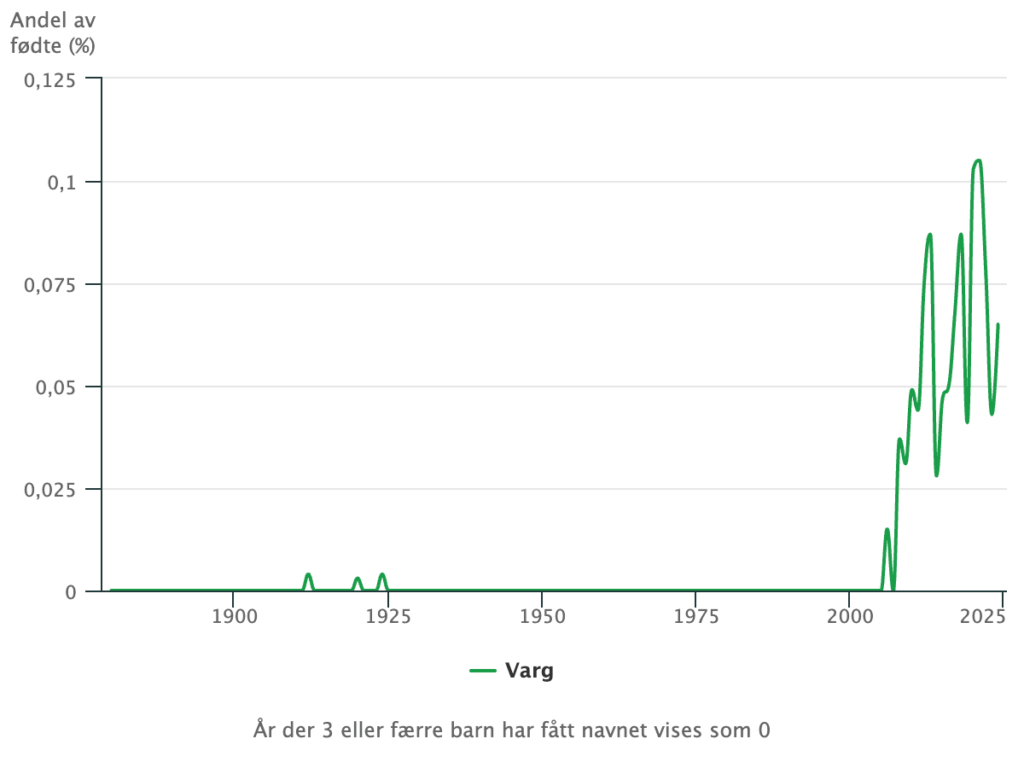
This is strong evidence that Vikernes was registered as Kristian Vikernes when he was first detained. Varg is not what is usually called a “common Hordaland name”, as the historical overview of the use of the name in Norway from Statistics Norway clearly shows.
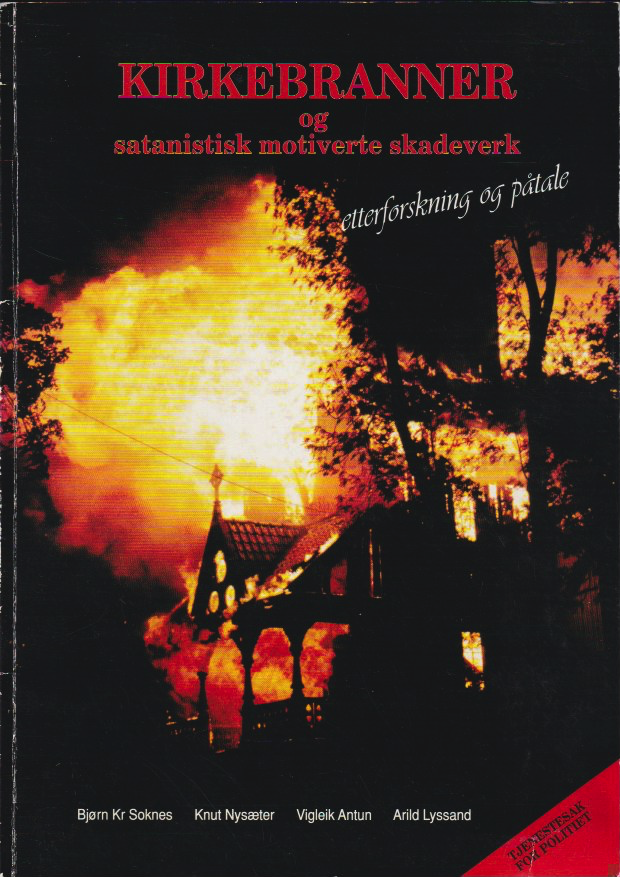
Vikernes was released from custody on March 2, 1993. Økokrim’s (The National Authority for Investigation and Prosecution of Economic and Environmental Crime) series of publications number 11, 1998 – entitled Kirkebranner og satanistisk motiverte skadeverk – etterforskning og påtale (Church fires and satanic-motivated damage – investigation and prosecution) writes about the release that:
After six weeks of investigation and several rounds in the court of inquiry and the Court of Appeal, Varg Vikernes was finally released from custody on 02.03.93, without the police having managed to gather sufficient evidence of his involvement in the individual church fires that had occurred in the Bergen region.
Soknes, Nysæter, Antun & Lyssand, 1998, p. 14. My translation.
The Bergen police led the investigation, and it was in Bergen that Vikernes was held in custody. Not until the summer, on June 10, 1993, did the Attorney General request Oslo police officers to set up a special church arson team, which quickly began its work. Økokrim writes that “Vikernes took the release as a victory, while at the same time viewing all the commotion around him as good advertising for the Burzum project.”6
The Kerrang! article states that the interview is being conducted after Vikernes has been released from custody:
Vikernes is currently free on bail on two counts of arson. “I’ve been accused of child abuse, church burnings, possession of illegal weapons… a lot of things”, he states. “They also claim that I have… what shall I say?… “pushed” others to do things for me. But I’m only being charged with arson.”
“I don’t wish to comment on me being guilty or not”, says Vikernes, in his quiet, cold voice. “It would not be too intelligent for me to talk about that. I have a very good lawyer (Tor Erling – not available for comment), and that’s why I’m out on bail. He’s advised me not to talk too much about it”.
Hotton & Elliot, 1993, 27. mars, pp. 42–43.
The interview with Kerrang! must therefore have been conducted sometime between March 2 and the publication date of March 27, 1993. It is more likely that the interview was conducted early that month than late, given that Vikernes graces the cover of the magazine, and that it takes time to both edit and print a publication.
It is likely that Vikernes began using the first name Varg – at least officially – sometime between March 3 (the day after his release) and approximately March 20 (to allow some time for the magazine to be completed and printed).
Vikernes may well have started calling himself Varg both before he used it publicly and before he registered with the Norwegian Population Register under that name. In this respect, his own date of name change as 31 March 1993 may be correct if we look at registration in the Norwegian Population Register, even though he began using the name officially before that. Økokrim confirms that Vikernes changed his name in the Norwegian Population Register during 1993, and writes:
Initially, Vikernes appeared in the media with the Norwegian-sounding name Kristian. Paradoxically, Kristian is Latin for Christian – one who believes in God. It later emerged that he had changed his first name, and instead adopted the Norse name – Varg (Wolf) – which he is now registered with in the National Register.
Soknes, Nysæter, Antun & Lyssand, 1998, p. 13. My translation.
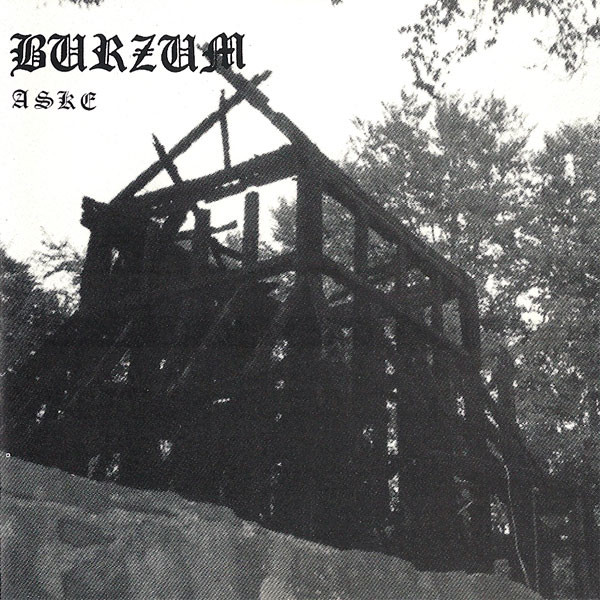
On March 10, 1993, Burzum released the EP Aske.7 According to the cover, one of the songs was recorded in April 1992, and the other two in August 1992. The cover features the burned-out ruins of the Fantoft Stave Church. The church, which dates back to around 1170, was set on fire and burned to the ground on June 6, 1992, the first of its kind to burn to the ground.8 Vikernes was charged with being behind the fire, but was never convicted. In the Norwegian newspaper Aftenposten on May 6 of the same year, it was reported that a Zippo lighter was included with 300 special editions of the Aske release.9 In other words, Vikernes and the record label Voices of Wonder, led by Kjetil Sveen, made a dizzyingly high bet while he was in the police spotlight for, among other things, the fire at the Fantoft Stave Church.
It seems a bit strange that the release of Aske on March 10th is not mentioned at all in the interview with Kerrang!. One would think that it was a golden opportunity to promote the release. Does this indicate that the interview was done before Vikernes had recovered from his arrest, thrown himself around and released the EP in the media frenzy that followed the arrest? If so, the date of the interview has been narrowed down to between March 3rd and 9th, 1993.
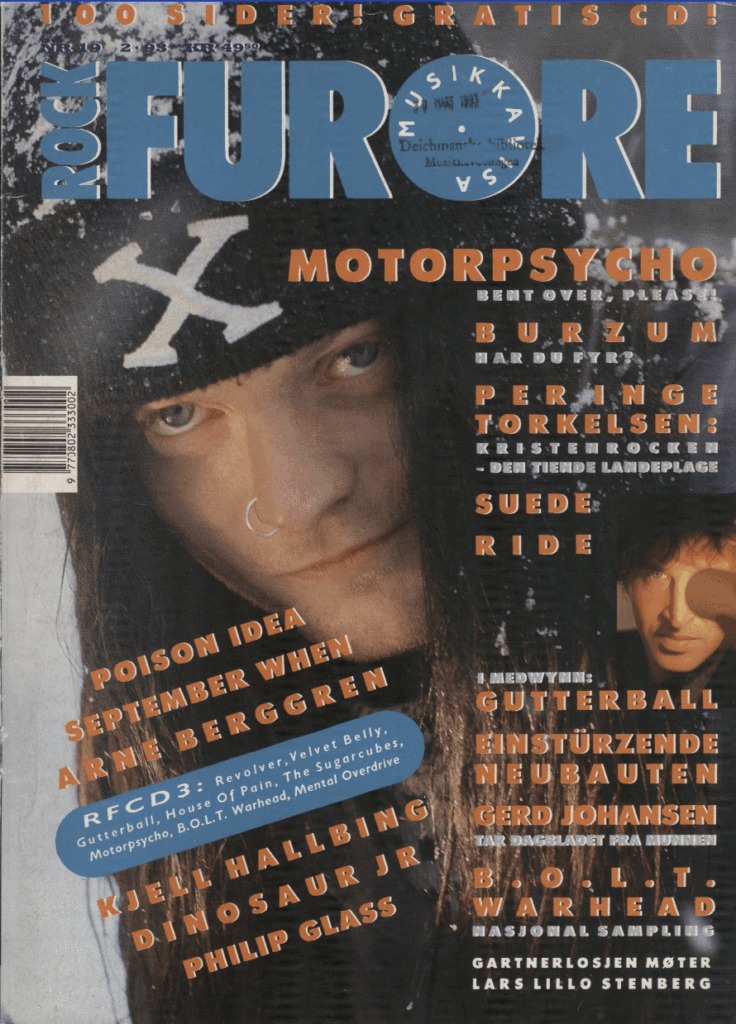
Perhaps Arvid Skancke-Knutsen and the now defunkt Norwegian music magazine Rock Furore will come to our rescue. In a four-page interview in Rock Furore, 1993, 19(2) which went on sale March 29, 1993, Skancke-Knutsen writes the following:
I meet Greven in a small café in Grünerløkka in Oslo.
He has just been released from six weeks in prison, and is now waiting for the case to come up in court in his hometown. In the meantime, he has taken a trip to the capital, where he will do three interviews. They are for Rock Furore, for the international heavy metal magazine Kerrang and for the large, Swedish daily newspaper Aftonbladet.
Skancke-Knutsen, 1993, March 30, p. 40. My translation.
Skancke-Knutsen consistently calls Vikernes Greven (the Count) throughout the interview, but also mentions that his stage name, although misspelled, is “Lord Grisnack”.10
Skancke-Knutsen writes that Vikernes will release the EP Aske soon, but does not specify how long it will be. This means that we are no closer to the date of the interview, nor to the date of Vikernes’ first name change to Varg. Vikernes must have made it to Oslo from Bergen in any case, and if the interviews have been practically completed, then it may have been more than a day since Vikernes was released from detention in Bergen on Tuesday, March 2. I think that Vikernes could have been in Oslo no earlier than Thursday, March 4. Kerrang!’s Jon Hotton and Paul Elliot must also have had time to travel to Oslo, if they actually met physically.
The Swedish newspaper Aftonbladet does not have an interview with Vikernes in 1993, at least not one that I can find in their archives. The interview may have been conducted but never printed, or it may never have been conducted.11 He is first mentioned in Aftonbladet on January 23, 1993 as the Count in connection with the arrest of the 15-year-old Stockholm girl Ilsa by the Norwegian police for questioning related to an alleged love affair with Vikernes. Ilsa was fanatically interested in Vikernes and wrote in her diary in 1992 that “I am the Countess of Grymyrk. My Count is called Grishnakh… He has bitten my throat and drunk my blood…”.12
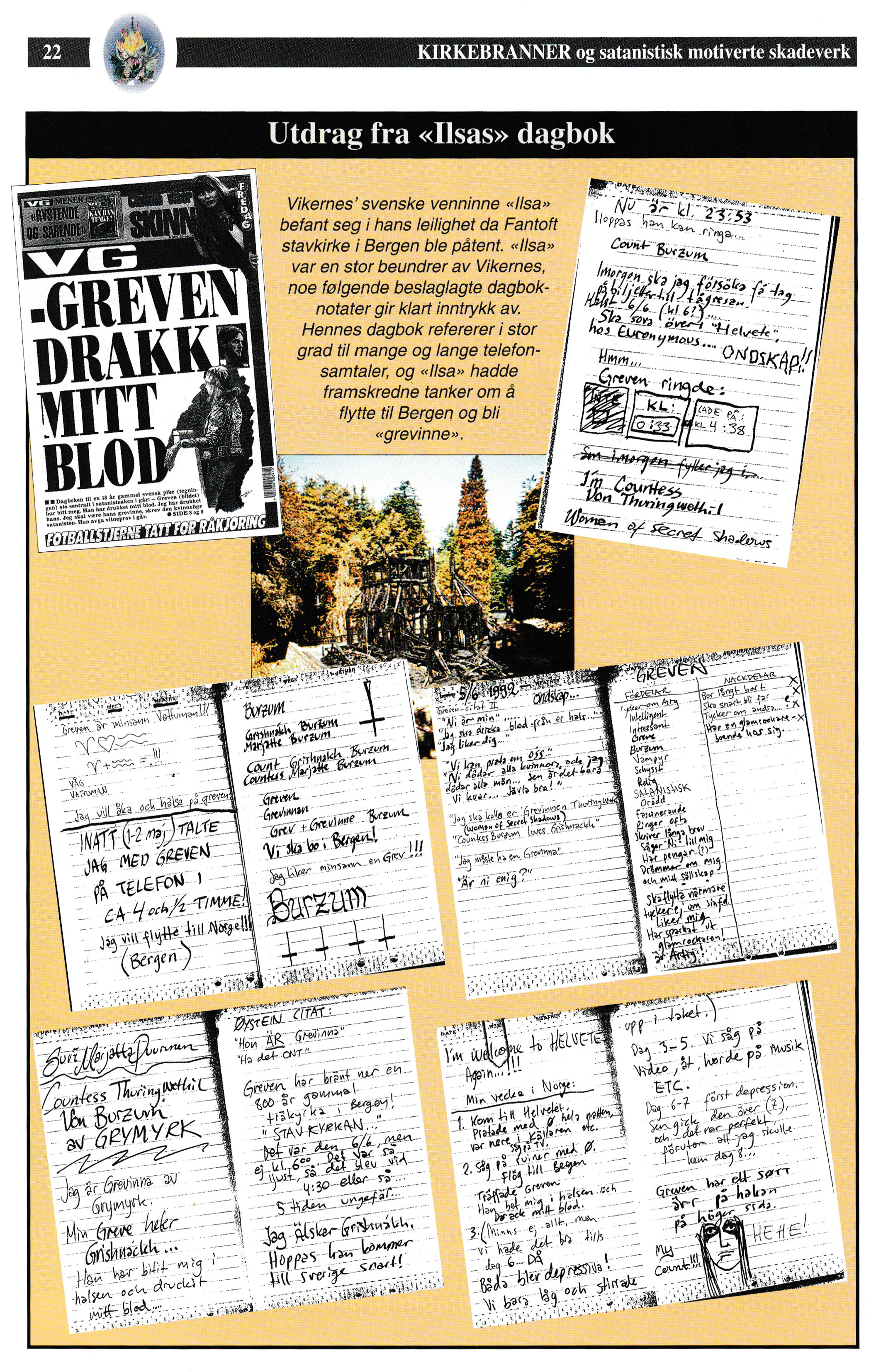
Then the Count reappears in a nasty case on both February 4 and March 3, 1993, where a woman named Maria set fire to a detached house with sleeping children in Upplands Väsby north of Stockholm as early as July 26, 1992. According to the woman, she committed the crime on orders from the Count. Several other serious cases carried out by other Swedish actors are also mentioned in the article from March. The Count is also mentioned a few times in a music column in the newspaper, on February 26, March 8, March 29, and April 19, 1993. His real name is not mentioned. The first time Aftonbladet writes “Varg Vikernes” is on April 12, 1997, if we are to believe the archive.
In an NTB report that was published on Sunday, August 22, 1993, after the murder of Aarseth on August 10 and the second arrest of Vikernes on Thursday, August 19, a note to the editorial staff receiving the news report states:
(To the editor. This message can replace our case with the keywords greven-fengslet [the-count-prison] from Saturday. Greven [the Count] has also changed his name. The name Varg was used in court)
NTBtekst, 1993, August 22. My translation.
This does not date the change of first name, as it may have happened between the two arrests, as Vikernes does not seem to have been in the media spotlight in the meantime. Already on March 31, 1993, VG used the name Varg after reading the Kerrang! article, but they write that there “he is called Varg Vikernes”, which indicates that he had not yet registered the first name Varg in the National Population Register.
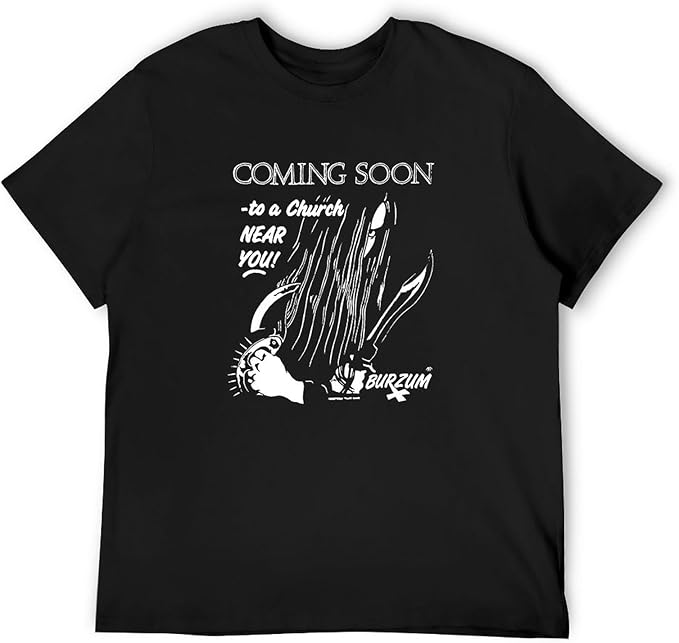
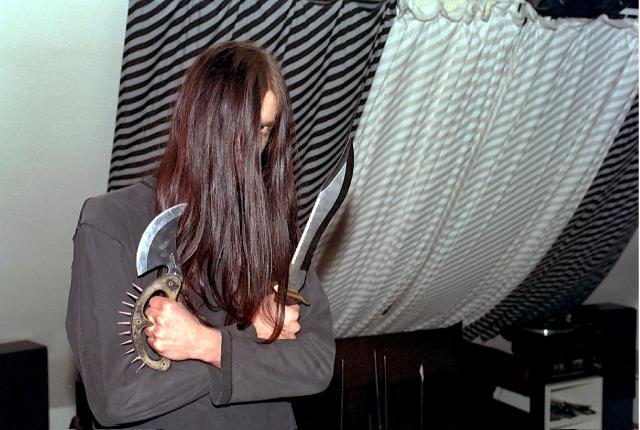
As late as August 4, Vikernes was named as Kristian Vikernes in an article written by Cathrine Krane Hansen in Bergens Tidende. The case concerns the fact that Vikernes has used the famous photograph of him with a knife without the consent of Bergens Tidende photographer Finn Arnesen. A drawn copy of the photograph adorned – and still adorns – T-shirts for sale that say “COMING SOON to a Church NEAR YOU”. Vikernes has also used the photograph of the burnt ruins of Fantoft Stave Church illegally in the release Aske. This may indicate that it was close to the second arrest on August 19, and the subsequent detention meeting in Oslo Court on Saturday August 21 – since the NTB report claims that the name Varg was used in court – that Vikernes had registered a change of his first name from Kristian to Varg in the National Population Register.
Vikernes’ change of first name from Kristian to Varg in the National Register may therefore have occurred both just before the murder of Aarseth on August 10, and it may have occurred shortly after.
Vikernes is called Varg Vikernes on the news broadcast Dagsrevyen on NRK on August 17, 1993.
For the record, it is worth mentioning that it requires legal basis or authorization to gain access to other people’s name changes in the National Population Register.
At the end of the Kerrang! interview, Aarseth states something that in retrospect can be seen as an inverted cautionary tale:
“What happens to us doesn’t matter. If I had a great enough reason to kill, I’d gladly serve 20 years in jail.”
“This is why our enemies should take us very seriously in the future. We have nothing to lose. I predict a new Dark Age…”
Hotton & EllHotton & Elliot, 1993, March 27, p. 46.
So he was right, except that he was the one who was sacrificed in the new dark age, by his friend and bandmate with the newly acquired predatory name Varg.
Sources
Ekern, Y. (1993, 6. mai). Lighter skal “selge” plate. Aftenposten, 58. http://urn.nb.no/URN:NBN:no-nb_digavis_aftenposten_null_null_19930506_134_201_1.
Fossberg, H. (2015). Nyanser av svart: Historien om norsk black metal. Cappelen Damm. http://urn.nb.no/URN:NBN:no-nb_digibok_2018031248147.
Hansen, B.E. (1993, 31. mars). Slaktes. VG, 45. https://urn.nb.no/URN:NBN:no-nb_digavis_verdensgang_null_null_19930331_1_89_1.
Hansen, C.K. (1993, 4. august). BT-bilder misbrukt. Bergens Tidende, 3.
Hotton, J. & Elliot, P. (1993, 27. mars). ”We are but slaves of the one with horns…”. Kerrang!, 436, 42–46.
Håård, L. (1993, 4. februar). Han gav ordern om mordbrand. Aftonbladet, 10.
Håård, L. (1993, 3. mars). “Jag är skyldig till mordbrand. Aftonbladet, 11.
Kristiansen, J. (2021). Metalion. The Slayer Mag Diaries. Bazillion Points. (Opprinnelig utgitt 2011)
Moynihan, M. & Søderlind, D. (2003). Lords of chaos: The bloody rise of the satanic metal underground. Feral House. (Opprinnelig utgitt 1998, for førsteutgaven se http://urn.nb.no/URN:NBN:no-nb_digibok_2010061020005)
NTBtekst. (1993, 22. august). “Greven” fengslet i åtte uker – kameraten i fire. NTB.
Olsson, S. (1997, 12. april). Nazistliga skulle mörda toppolitiker. Aftonbladet, 8.
Rem, Håvard, H. (2010). Innfødte skrik: Norsk svartmetall. Schibsted. http://urn.nb.no/URN:NBN:no-nb_digibok_2013071506060.
Skancke-Knutsen, A. (1993, 30. mars). I Grevens tid. Rock Furore, 19(2), 40–43. http://urn.nb.no/URN:NBN:no-nb_digitidsskrift_2024102480003_002.
Soknes, B. K., Nysæter, K., Antun, V. & Lyssand, A. (1998). Kirkebranner og satanistisk motiverte skadeverk – etterforskning og påtale. Økokrims skriftserie nummer 11.
Stenberg, B. (1993, 8. mars). Vem bryr sig om Satansmusiken – egentligen? Aftonbladet, 36.
Stenberg, B. (1993, 29. mars). Musiken där svart möter vitt. Aftonbladet, 29.
Stenberg, B. (1993, 19. april). Punk, djävlar anamma och party. Aftonbladet, 29.
Stenberg, B. (1993, 26. februar). Trenden som är svartare än döden. Aftonbladet, 5.
Svarstad, A. (1993, 23. januar). 15-årig djävulsdyrkare greps. Aftonbladet, 11.
Tønder, F.B. (1993, 20. januar). Djevledyrkere tar ansvar for åtte kirkebranner. Bergens Tidende, 2.
Tønder, F.B. (1993, 21. januar). Flygeblad og tips avslørte “Greven”. Bergens Tidende, 4.
Tønder, F.B. (1993, 26. januar). Bløff eller utrolig sant? Bergens Tidende, 6.
Tønder, F.B. (1993, 27. januar). “Grevens” venner ble sett ved kirkebrann. Bergens Tidende, 5.
Vikernes, V. (1991). Interview with Varg Vikernes. “Circle of The Impious Mortals” Magazine (#3, 1991). Werner “Nyar” Linke. Burzum. https://burzum.org/eng/library/1991_interview_cotim.shtml.
Vikernes, V. (1992a). Interview with Varg Vikernes. “Orcustus – The Shadow Of The Golden Fire” Magazine (#01, 1992), by Bård “Faust” Eithun. Burzum. https://burzum.org/eng/library/1992_interview_orcustus.shtml.
Vikernes, V. (1992b). Interview with Varg Vikernes. “Putrefaction” Magazine (#07, 1992). Burzum. https://burzum.org/eng/library/1992_interview_putrefaction.shtml.
Vikernes, V. (1992c). Interview with Varg Vikernes. “Desecrater” Magazine (№2, 1992). Burzum. https://burzum.org/eng/library/interviews/1992_interview_desecrater.shtml.
Vikernes, V. (1992d). Interview with Varg Vikernes. “Forest of N’gai” Magazine (1992). Burzum. https://burzum.org/eng/library/interviews/1992_interview_forest_of_ngai.shtml.
Vikernes, V. (1993a). Interview with Varg Vikernes. “Charontaphos” magazine (№1, 1993), by Ndizi Na Nyama. Burzum. https://burzum.org/eng/library/interviews/1993_interview_charontaphos.shtml.
Vikernes, V. (1993b). “We Are But Slaves Of The One With Horns…” Biographical interview from “Kerrang!” Magazine (№436, March 1993), by Jason Arnopp. Burzum. https://burzum.org/eng/library/interviews/1993_interview_kerrang.shtml.
Vikernes, V. (1994). Det Som Engang Varg. Interview with Varg Vikernes. “Slayer” Magazine (#10, 1994). Jon “Metalion” Kristiansen. Burzum. https://burzum.org/eng/library/interviews/1994_interview_slayer.shtml.
Vikernes, V. (1997). Vargsmål. https://ia802800.us.archive.org/22/items/vargsmaal_norsk/Vargsmaal_norsk.pdf.
Notes
- Moynihan & Søderlind, 1998/2003, p. 208. ↩︎
- Se Discogs: https://www.discogs.com/master/1486143-Old-Funeral-Devoured-Carcass. ↩︎
- Kristiansen, 2011/2021, pp. 292–294. Se også Vikernes, 1994. ↩︎
- Burzum: https://burzum.org/eng/library/. ↩︎
- Tønder, 1993, 20. januar, p. 2. My translation. ↩︎
- Soknes, Nysæter, Antun & Lyssand, 1998, p. 14. ↩︎
- Rem, 2010, pp. 158–159 claims that it is for promotional purposes for Aske that Vikernes and some friends write a case that they send to Bergens Tidende in early January 1993. At the end of the case they write that Vikernes knows a lot about the fire in the Fantoft stave church and the murder in the Olympic Park in Lillehammer (in August 1992). Neither of these crimes had been solved at the time. Bergens Tidende does not accept the interview, but finds the last part of the case so interesting that they send Finn Bjørn Tønder home to Vikernes. Rem also indicates that the idea from the record company Voices of Wonder about an enclosed Zippo lighter for Aske may have delayed the release of the album. ↩︎
- Vikernes was convicted of setting Storetveit Church in Bergen on May 27, 1992. This was the first church to be set on fire and linked to the ideology of black metal. See https://lokalhistoriewiki.no/index.php?title=Kirkebrannene_i_1990-%C3%A5ra. ↩︎
- Ekern, 1993, May 6, p. 58. See also Fossberg, 2015, p. 32. Vikernes himself writes on Burzum.org that the first 1000 copies came with a lighter: “The first 1000 copies came with a free lighter bearing the same image (which were distributed by Voices of Wonder Records)”, see https://burzum.org/eng/discography/official/1993_aske.shtml. ↩︎
- Skancke-Knutsen, 1993, March 30, p. 42. ↩︎
- I have contacted Aftonbladet to find out about this, but have not yet received a response. ↩︎
- Soknes, Nysæter, Antun & Lyssand, 1998, p. 22. My translation. ↩︎
Leave a Reply